2026 buyer's guide
Market-Entry Consultant: What to Buy Before You Enter
A market-entry consultant should reduce a specific decision, not sell a slide deck. The brief should name the market, customer hypothesis, claims to test, evidence needed, decision date and stop/go criteria. Buy an evidence sequence: desk research, customer or partner validation, then a bounded pilot only if findings justify it. The useful output is a recommendation tied to evidence, uncertainty and a clear next action. Before hiring, ask what decision will become safer, what the consultant will test, what your team must provide and what finding would stop the work. Do not approve a broad “market study” until those points are explicit.
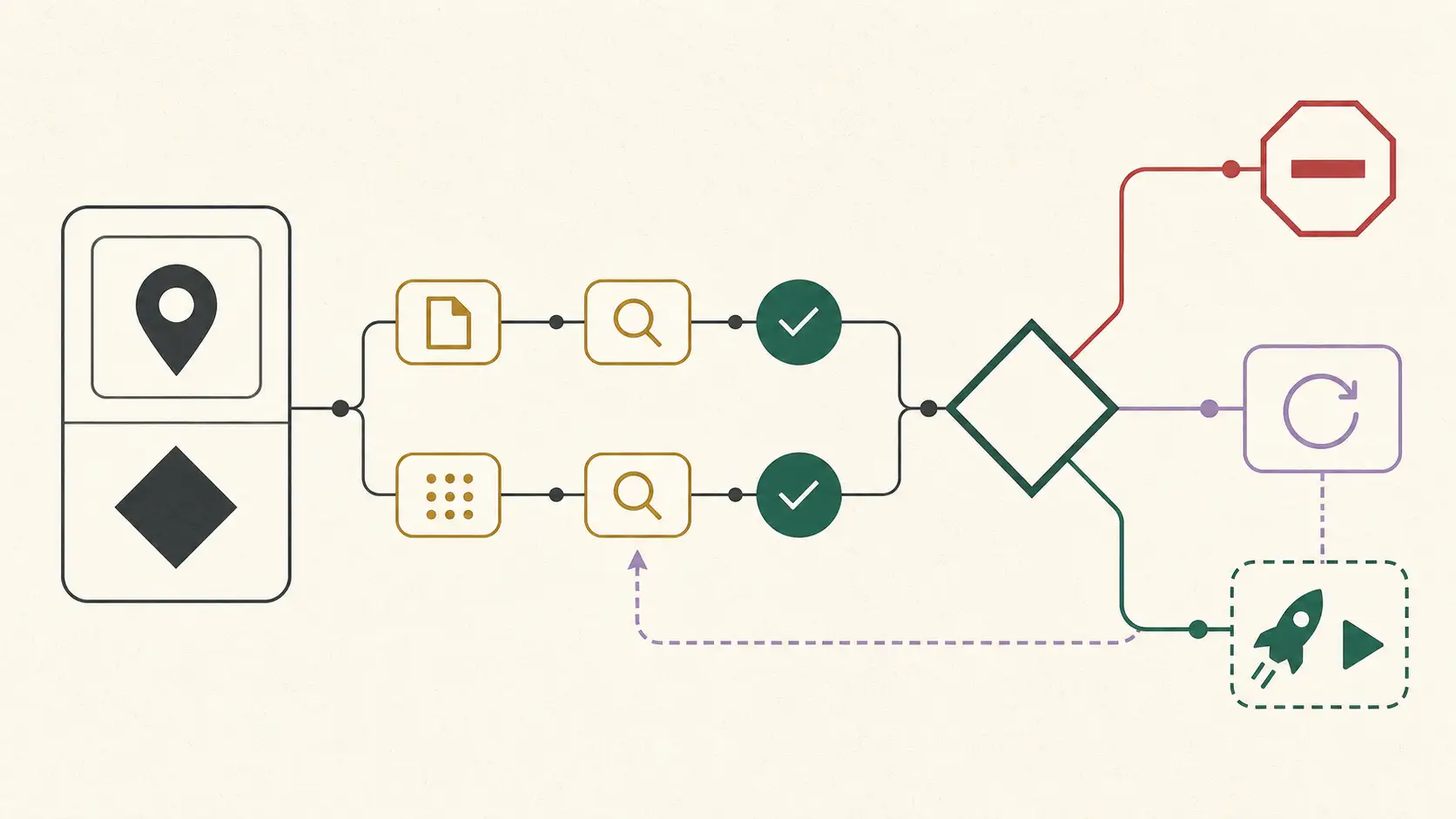
Our verdict: hire for the next irreversible decision, not for a generic market report.
What does a market-entry consultant do?
A market-entry consultant helps a buyer decide whether and how to enter a defined market. The category can cover market assessment, entry strategy and support for implementation. Market-entry consulting concerns commencing sales, manufacturing or outsourcing in a new geographic market (Wikipedia).
That category label is broad. The purchase becomes useful only when the consultant translates it into a decision. “Assess the French market” is a topic. “Decide whether to validate a direct-sales hypothesis or stop before a pilot” is a decision.
The consultant should make assumptions visible, find evidence that could disprove them and show what remains unknown. A recommendation without that chain is hard to challenge. A large research pack may still leave the buyer unable to act.
Market-entry strategy is commonly framed as a choice about how a company enters a new market, with options shaped by the situation rather than one universal route (NMS Consulting). The consultant’s job is therefore not to select a fashionable entry mode. It is to help the buyer compare realistic choices against named evidence and constraints.
Which decision should the engagement resolve?
Start with the next commitment that will be costly or difficult to reverse. It could be whether to authorize a partner search in Spain, whether to test a customer hypothesis in the United States or whether to stop work on a country altogether. The country and decision must be named.
GIA’s buyer framework uses four decision tests. The decision must be specific, with one market, one customer hypothesis and one commitment in scope. It must be decidable, so the required evidence can change a stop, continue or revise decision. It must be owned by a named buyer who will make the call by a stated date. It must also be bounded, with the engagement ending when the agreed evidence threshold is met rather than when every question is answered.
Write the decision as a sentence before requesting proposals. For example: “Should we authorize a bounded distributor pilot in Mexico, revise the partner hypothesis or stop?” This wording forces bidders to explain how their work will support that choice.
If several decisions are bundled together, separate them into gates. First test whether the customer problem is credible. Then test access through customers or partners. Consider a pilot only when the earlier evidence supports it. Our guide to choosing a market-entry strategy can help frame the choices without treating them as a single purchase.
What evidence should the consultant deliver?
The deliverable should show both the conclusion and the evidence path. Desk research is useful for mapping the question and identifying claims to test. It is not a substitute for direct validation when the decision depends on how target customers or partners respond.
Consultant marketplaces describe market-entry work as spanning research, strategy and implementation support (Consultport). University consulting programs also present market entry as applied work connecting organizations with a target market question (University of Maryland Robert H. Smith School of Business). Those broad category descriptions help define the field, but they do not define what your purchase must contain.
GIA’s buyer evidence checklist is:
- A claim register stating each material hypothesis, its source, confidence and status.
- A research trail that separates sourced context, direct observations and consultant interpretation.
- Customer or partner validation notes linked to the claims they support or weaken.
- A recommendation that presents stop, revise and proceed paths, with unresolved uncertainty visible.
- A handoff pack containing the evidence, decision record and conditions for any bounded pilot.
Ask for a sample structure, not confidential client work. Check whether evidence can be traced from the recommendation back to a source or observation. Also ask how contradictory findings will be recorded. A polished conclusion is less useful if dissenting evidence has disappeared.
Run the Reality Check
Turn a broad market question into a decision, an evidence plan and explicit stop/go criteria. Run the Reality Check before commissioning a larger study.
How do you compare a consultant with a research firm?
Compare providers by fit with the decision, not by category prestige. The table below is GIA’s buyer framework. It does not rank provider types. A focused research firm may be the right choice when the need is a defined evidence gap. A consultant or team may fit better when evidence must be converted into a choice and next action.
| Provider type | Scope fit | Buyer must provide | Useful deliverable | Main procurement question |
|---|---|---|---|---|
| Research-only firm | A defined research question or evidence gap | Target market, audience definition, claims to investigate and intended use | Traceable findings with method, limits and source trail | How will the research change our named decision? |
| Independent consultant | A bounded decision needing senior synthesis and direct ownership | Decision owner, internal assumptions, access and constraints | Evidence-backed recommendation with uncertainties and next gate | Which work will you perform directly, and where do you need support? |
| Specialist market-entry team | A decision requiring several research or validation capabilities | Clear scope, internal access, approval path and stop/go rules | Integrated evidence pack, recommendation and bounded pilot design | How will evidence remain consistent across the team? |
| Large consultancy | A broad, multi-stakeholder decision with internal coordination needs | Executive sponsor, governance, data access and decision rights | Decision record, workstream synthesis and implementation choices | Which part of the proposed scope is essential to this decision? |
Do not assume that a broader provider is automatically safer. Breadth can be valuable when the decision actually spans several stakeholders. It can also hide work that is not needed for the next gate. If your need is primarily market data, compare the offer with market research firms. If your problem is choosing a route, begin with the market-entry strategy guide.
What belongs in the brief?
The brief is a decision contract. It tells the consultant what the buyer needs to learn and tells the buyer what will count as sufficient evidence. It should name the target market, customer hypothesis, claims to test, evidence required, decision owner, decision date and stop/go criteria.
It should also state what the buyer will provide. This may include existing research, internal assumptions, access to relevant team members and the constraints the recommendation must respect. Keep each item connected to the decision. Background that cannot affect the choice belongs in an appendix or outside the scope.
Define outputs by use. Instead of requesting “a detailed report,” request a claim register, evidence trail, validation record, recommendation and handoff pack. Specify that assumptions and unresolved questions must remain visible.
Finally, state the pilot rule. The consultant is not automatically authorized to turn research into execution. A pilot begins only if the findings meet the agreed conditions and the buyer approves a bounded test.
Which red flags should stop the purchase?
A proposal should pause when it cannot connect its activities to your decision. The same applies when the outcome appears fixed before evidence is gathered. If every path leads to a larger engagement, stop/go criteria have no force.
Be cautious when the proposed output is described mainly by page count, workshop count or a generic methodology. Those items may support the work, but they are not evidence that the decision will improve. Ask which claim each activity will test and what result could change the recommendation.
Another red flag is hidden dependency. If the consultant needs customer access, partner introductions or internal data, that requirement should be explicit before purchase. Otherwise, the engagement may produce desk research because the validation inputs never appeared.
Also stop when evidence ownership is unclear. The buyer should know what will be handed over, how sources and observations will be distinguished and whether the recommendation can be reviewed after the engagement. Do not accept certainty theatre. A credible consultant can state what remains unknown.
What should happen after the recommendation?
The decision owner should record one of three outcomes: stop, revise or proceed. The record should point to the evidence that drove the choice and preserve the conditions that would justify revisiting it.
If the answer is stop, capture why. A stopped entry can still create value when it prevents a weak commitment and leaves a reusable evidence trail. If the answer is revise, define the next claim to test rather than reopening the entire market question.
If the answer is proceed, translate the recommendation into a bounded pilot. The pilot should test the remaining high-impact uncertainty. It should not become a quiet full launch. Keep its hypothesis, evidence, owner and stop/go gate connected to the original decision. GIA’s market-entry pilot service is designed around that bounded next step.
The consultant’s handoff should let the buyer continue without reconstructing the reasoning. That means the evidence trail, open questions and decision record remain usable after the final presentation.
Key takeaways
- Buy resolution of a named market decision, not coverage of a broad topic.
- Require a traceable sequence from desk research to direct validation and, only if justified, a bounded pilot.
- Compare provider types by scope fit, buyer inputs, useful output and the procurement question they must answer.
- Keep stop, revise and proceed paths visible before the engagement starts.
Frequently asked questions
What does a market consultant do?
A market consultant researches and interprets a defined market question for a buyer. For market entry, the useful role is narrower: test the claims behind a named entry decision, show the evidence and recommend whether to stop, revise or proceed.
How do I find a consultant?
Write the decision brief first, then compare candidates against the same evidence requirements. Ask each candidate to explain the claims they would test, the access they need, the form of the handoff and what finding could stop the work. Category directories can help create a shortlist, but the decision fit should determine the purchase.
What should a market-entry study include?
It should include the named decision, customer hypothesis, claim register, sourced context, direct validation relevant to the decision, visible uncertainty, a recommendation and stop/go criteria. GIA’s checklist is a buyer framework, not a universal industry standard.
When should a pilot start?
A pilot should start only after earlier evidence supports it, the remaining uncertainty can be tested in a bounded way and the buyer approves the stop/go rules. If research has not established what the pilot is meant to prove, the pilot is premature.
Run the Reality Check
Define the decision and evidence gate before buying a broad engagement. Run the Reality Check, or move to a bounded market-entry pilot when the findings justify one.
Written by Tileo, operator at Go International Advisory.