Expansion buyer's guide
How do you choose a market research firm for expansion?
Choose among market research firms by the exact expansion decision they must support for one named distant market. Define the evidence type, geography, method, access, deliverable, and stop or proceed rule before you compare providers. A generic top-firms list cannot select the fit without those constraints. The SBA distinguishes existing sources from direct research and notes that existing sources may not be specific to your audience. Source: SBA, accessed 2026-09-02.
Our editorial verdict: the best proposal makes the next expansion decision safer to take or easier to stop. The longest credentials deck does not win by default.
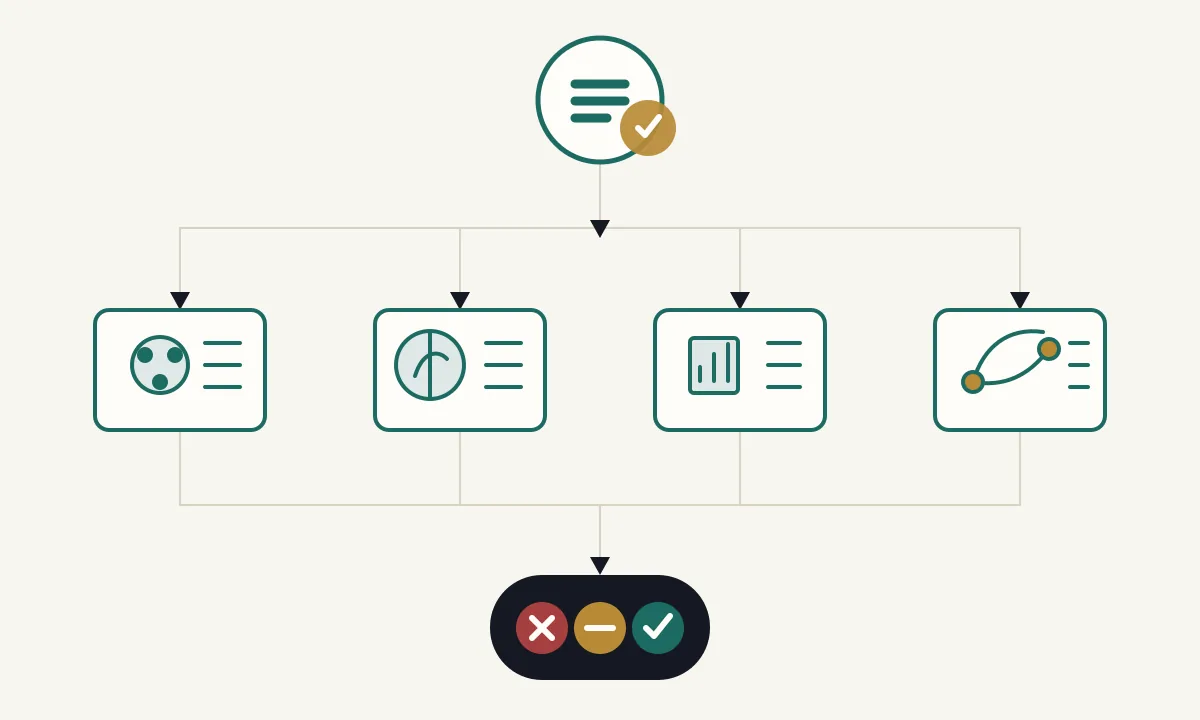
What type of market research firm do you need?
The SBA separates research based on existing sources from research conducted directly with consumers. It says existing sources can answer broad, measurable questions. Direct work can give a more detailed view of a specific target audience. Source: SBA, accessed 2026-09-02. The International Trade Administration likewise presents international research as a way to assess demand and destination factors. It also helps firms compare markets and plan an export step. Source: International Trade Administration, accessed 2026-09-02. Trade.gov also provides a separate Market Intelligence route for data, tools, and reports from its trade specialists.
The four categories below are our buyer-side classification. They are not rankings, accreditations, or claims about any vendor's results.
Full-service firm
Fit: one coordinated brief spanning several methods, audiences, or markets.
Ask for: who owns design, recruitment, collection, analysis, and synthesis. Ask which work is subcontracted. Check how all methods answer the same decision.
Specialist or fieldwork firm
Fit: a focused sector, language, method, respondent type, or local recruitment challenge.
Ask for: the relevant access route and screening process. Request the research tool and field controls. Mark the line between evidence and interpretation.
Data or report vendor
Fit: an initial view of demand, market structure, trends, competitors, or public indicators.
Ask for: source provenance, dates, definitions, and update policy. Confirm the geography and permitted use. Name the questions the data cannot answer about your offer.
Market-entry evidence partner
Fit: a named go, no-go, or go-if decision involving your offer, buyers, channels, or partners in the target market.
Ask for: attributable evidence and an assumption register. Request any dissenting signals. Tie the final advice to a stated decision rule. GIA fits this category. It is one option, not a universal number one.
What evidence should you request in the proposal?
Trade.gov describes country guides, industry research, trade statistics, market rankings, initial market checks, and custom research as distinct resources. That range supports a simple buying rule. Name the output you need. Do not buy “research” as one vague product. Source: International Trade Administration, accessed 2026-09-02.
Our recommended evidence request is:
- Decision statement: the named country, B2B segment, offer, and choice the work must inform.
- Method map: each research question linked to an existing source, interview, survey, observation, or other method. The SBA lists surveys, questionnaires, focus groups, and in-depth interviews among direct methods. Source: SBA, accessed 2026-09-02.
- Source register: publisher, link, publication date, access date, definition, geography, and any transformation made by the firm.
- Fieldwork file: recruitment criteria, instrument, response records, exclusions, and how identities or confidentiality will be handled.
- Limitations: what the design cannot establish, where evidence conflicts, and which assumptions remain unverified.
- Decision output: the evidence supporting proceed, revise, or stop, separated from the provider's opinion.
The MRS says its Code of Conduct applies to MRS members and company partners. It highlights participant wellbeing. It also calls for reporting on sample traits when a sample is described as representative. Ask bidders whether a professional code applies to their work. Ask how it shapes the proposed process. Do not assume a code applies merely because it exists. Source: Market Research Society, accessed 2026-09-02.
Unsure whether you need desk framing, an audit, or live market evidence?
Run the Reality CheckHow should you score a market research proposal?
Score the written proposal, not the sales presentation. The weights below are Go International Advisory's editorial procurement tool, not an industry standard or a prediction of project performance.
| Criterion | Weight | Full-score evidence in the proposal | Score |
|---|---|---|---|
| Decision fit | 25 | Names the country, segment, offer, decision owner, and decision the evidence will inform. | 0–25 |
| Method fit | 20 | Links each question to a method and explains what that method can and cannot establish. | 0–20 |
| Access and fieldwork | 15 | Defines recruitment, screening, local or sector access, instruments, records, and exclusions. | 0–15 |
| Traceability | 15 | Commits to dated sources, definitions, source links, evidence files, and a visible assumption register. | 0–15 |
| Ethics and data handling | 10 | Names the applicable code or internal standard and explains consent, participant care, confidentiality, and data handling. | 0–10 |
| Limitations and dissent | 10 | Commits to report uncertainty, conflicting evidence, exclusions, and unresolved questions. | 0–10 |
| Decision output | 5 | Separates evidence from opinion and specifies a decision-ready final format. | 0–5 |
Maximum score: 100. Set your own pass rule before opening bids. A high total should not override a zero on an essential criterion for your specific decision.
How do you compare proposals without comparing prices?
Normalize the scope first. One proposal may use existing sources. Another may include direct interviews. The SBA treats those as different routes with different uses. Source: SBA, accessed 2026-09-02. A side-by-side fee check can mislead. First align the decision, methods, access, rights, and outputs.
Use this buyer sequence:
- Send every bidder the same decision statement and required evidence fields.
- Ask each bidder to mark included work, excluded work, dependencies, subcontracting, and data or deliverable rights.
- Score independently before a consensus meeting, then record why reviewers differ.
- Resolve any zero on decision fit, traceability, fieldwork access, or ethics before discussing selection.
- Write the evidence threshold for proceed, revise, or stop into the brief before work begins.
This sequence does not identify a “biggest” or “best” firm. It creates a defensible fit decision for one expansion question. Need help defining that question? See our guide to market research for international business Then review the distinction between a market research consulting firm and decision evidence.
Can ChatGPT replace a market research firm?
No, not for primary evidence. Treat ChatGPT as an unverified drafting and research aid. It can help outline a brief, suggest questions, or summarize material that a human then verifies. It cannot create genuine responses from the named buyers, partners, or experts whose evidence the expansion decision requires.
This caution fits Trade.gov's note about its beta AI chatbot. Its answers may be wrong or incomplete. They cannot be specific to a company's product or foreign market. Users should check them against references. They should not use them as legal or professional advice. Source: International Trade Administration chatbot notice, accessed 2026-09-02.
What are the four types of market research?
A practical answer starts with secondary and primary research. The SBA says existing sources can address broad, measurable questions. Direct research can examine a specific business or customer group. It lists surveys, questionnaires, focus groups, and in-depth interviews as direct methods. Source: SBA, accessed 2026-09-02. In this procurement guide, qualitative work explores language and reasoning. Quantitative work measures defined responses. Do not force every brief into four labels. Choose the source and method that answer the open expansion decision.
What should you know before hiring a market research firm?
How much does it cost to hire a market research firm?
This guide does not publish a generic price because scope,
method, geography, and evidence requirements differ. Ask every
bidder to define deliverables, exclusions, fieldwork, data rights,
and the change process so the bids cover the same decision.
Which market research firm is best?
There is
no defensible universal winner here. The best fit is the provider
whose method, access, deliverables, ethics, and decision rule match
your named question and whose evidence can be audited.
Should I hire a large firm or a specialist?
Choose a full-service firm when one coordinated mixed-method
program is central to the brief. Choose a specialist when one
sector, respondent group, language, or method is the hard part.
These are editorial fit rules, not performance claims.
Can ChatGPT do market research?
Use it only as
an unverified aid for drafting or organizing. Verify its output and
do not substitute it for primary evidence from the people relevant
to the decision.
Turn a vague research purchase into a named expansion decision.
Run the short diagnostic to identify whether the gap is desk intelligence, pressure-testing, or live market evidence.
Run the Reality CheckWritten by Tileo, operator at Go International Advisory.