Guide
Market Opportunity Analysis: A Practical Decision Guide
A market opportunity analysis checks whether a specific offer has a sound path to buyers and fair returns in a named market. For an entry abroad, it should answer one key question. Should we proceed, run a small test, or stop?
The analysis must go beyond market size. It should test demand and define the buyer. It should show how the firm can reach that buyer. It must also check limits, costs, and proof that could disprove the case. Each finding should point to a source, an observed fact, or an assumption that still needs a test. A large market is not enough if buyers are out of reach. The same is true if the channel cannot support the price or a local rule changes the offer. The useful output is a choice with clear terms, owners, and open questions. It is not a report that only looks sure of itself.
What is market opportunity analysis?
Market opportunity analysis asks whether a given firm can win a given type of work in a given market. It links outside market proof to the firm's offer, sales model, delivery skills, and money needs.
ScalePath says firms use market opportunity analysis when they decide whether to enter or leave a market. The work covers market size, rivals, and the chance of success (ScalePath). Sapio Research calls it a mix of custom research and client data. The aim is to find growth options in a given market or field and form a plan for action (Sapio Research).
Both views make the work specific to the firm. The question is not just, "Is this market attractive?" It is, "Can our offer reach the right buyer here on terms that support the next step?"
Market research supplies the facts. The U.S. Small Business Administration says it blends buyer conduct with economic trends. Its guide asks firms to study demand, market size, economic signs, buyer location, market crowding, and price (U.S. SBA). A market opportunity analysis turns those facts into a choice.
If the team still needs broad facts on buyers and rivals, start with market research for small business. Use a market feasibility study if the main issue is whether the planned entry can work. That study covers technical, work, finance, and rule-based needs. The opportunity analysis sits between raw research and a firm entry choice. For a dated evidence record with contradiction and field checks, see market research for international business.
How do you analyze a market opportunity?
Begin with a choice to make, not a broad topic. "Assess Southeast Asia" is too broad. A better brief is: "Decide if our plant monitoring offer merits a small sales test with food plants in Malaysia." It names the buyer, offer, place, and choice.
Then work through this sequence:
-
Define the offer and use case in the buyer's words. State the problem, current option, buying trigger, and reason to change.
-
Name the buyer system. Split out the user, tech reviewer, budget owner, purchasing team, and any local agent. Do not treat "the customer" as one person.
-
Test demand with buyer-level signs, not broad interest alone. Look for seen problems and active searches for a fix. Check who owns the budget. Also check buying events, relevant bids, and sound buyer talks.
-
Map the route to market. Show how the team can reach an account and earn trust. Name who sells, signs, delivers, and supports the buyer.
-
Find limits early. Check if product changes, approval, data handling, contracts, import steps, tax, language, service, or partner needs could change the case. Treat each item as a question until it is checked for the named offer and market.
-
Build the cost case from the route. Do not start with a top-down market share guess. Include the price a buyer may accept, discounts, fees, local changes, delivery, support, travel, payment terms, and staff needs.
-
Search on purpose for proof against the case. Ask what would make the offer weak. Seek sources that could reveal it.
-
Give one output: proceed, test, or stop. Add clear terms and name the proof still missing.
The market-entry framework can then turn a positive or conditional decision into a staged entry plan.
What evidence belongs in a market opportunity analysis?
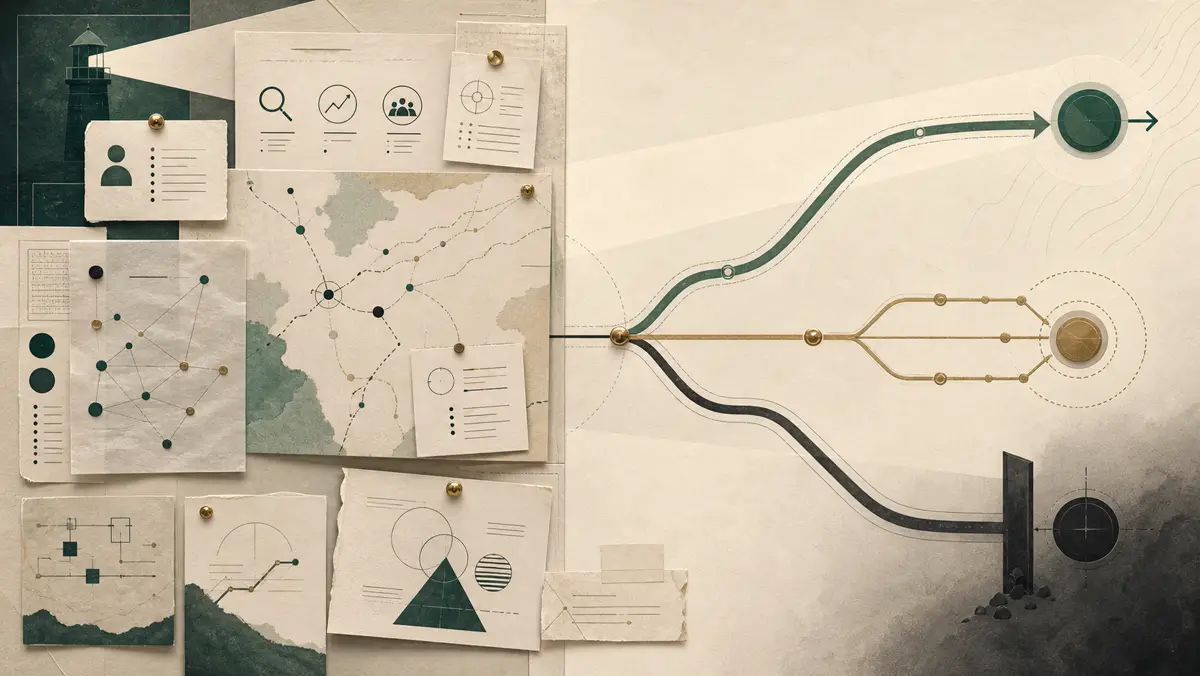
Use an evidence board that puts each part of the case in view. The board below is Go International Advisory's method. It is not an outside standard.
| Evidence area | Decision question | Evidence that belongs on the board | Weak substitute | Disconfirming signal to seek |
|---|---|---|---|---|
| Demand | Is there a live problem tied to action? | Buyer interviews, observed purchase behavior, relevant tender or inquiry patterns, current customer pull, and clearly sourced market data | A broad growth forecast or anecdotal enthusiasm | Buyers acknowledge the problem but do not assign budget, urgency, or ownership |
| Buyer | Who experiences the problem, approves a solution, and controls the purchase? | Named account profiles, role maps, buying triggers, procurement steps, current alternatives, and reasons to switch | A demographic label or generic persona | The user likes the offer but the economic buyer sees no reason to change |
| Route to market | Can the team reach, sell to, contract with, deliver to, and support the buyer? | Direct account access, partner conversations, channel roles, procurement requirements, sales ownership, and support design | A list of possible channels | The proposed partner lacks buyer access, incentive, capability, or commitment |
| Constraints | What could block or reshape the offer? | Verified requirements for the product, contract, data, import path, tax treatment, language, service, and local operations | "We will handle compliance later" | A requirement changes the product, cost, sales path, or eligible customer set |
| Economics | Can the path produce an acceptable return under explicit assumptions? | Buyer price evidence, cost build-up, channel deductions, delivery and support costs, payment terms, capacity needs, and downside cases | Market size multiplied by an assumed share | The price buyers will consider does not cover the real cost to acquire, deliver, and support |
| Disconfirming signal | What evidence would cause us to revise or reject the thesis? | Kill criteria, contrary interviews, lost-deal patterns, competitor strength, substitute behavior, and assumption sensitivity | A risk list with no consequence | The team explains away contrary evidence instead of changing the decision |
The SBA draws a line between existing sources and direct research. Existing sources can answer broad questions that can be measured. Direct research can answer questions about a given firm or buyer (U.S. SBA). Use both with care. Desk research can frame the market and show its limits. Direct talks and tests can check the proposed buyer, message, price, and route.
Trade.gov links to Country Commercial Guides made at U.S. embassies. It says they cover market terms, openings, rules, and business customs (Trade.gov). This can be a useful place to start where it applies. It does not prove your specific case. Claims about your firm still need proof about your firm.
Need to turn a market thesis into an evidence-backed entry decision? Run the Reality Check.
How is an international assessment different?
Distance adds steps between demand and revenue. A buyer may value the offer while the contract, delivery, support, or channel plan fails. The analysis must link market appeal to the way entry will work.
An international assessment should make these boundaries explicit:
-
Market boundary: country, region, segment, use case, and buyer groups left out.
-
Offer boundary: what is sold now, what may need a change, and what the planned entry leaves out.
-
Commercial boundary: direct or partner sales, signing firm, currency views, payment flow, and who can approve discounts.
-
Operating boundary: delivery site, setup, training, service owner, language cover, and path for urgent issues.
-
Constraint boundary: which rule, law, tax, import, approval, data, and job questions are checked. Name who checked them and which stay open.
Do not turn open issues into casual legal claims. Record the question, source, expert, finding, and effect on the choice. State market guides can point the search in the right way. They do not replace advice fit for the product, deal, and place.
This is why rival research must include other choices, not just firms with like products. The buyer may keep the old process or build its own tool. It may delay the deal or use a different type of fix. The SBA's guide asks firms to consider indirect or minor rivals and barriers to market entry (U.S. SBA).
What is an example of market opportunity analysis?
Consider a hypothetical German industrial software company assessing whether to sell its maintenance-planning product to food manufacturers in Japan. This example is a decision design, not a claim about either market.
The team starts with a thesis: a defined plant role has a costly planning problem, the existing software can address it with bounded adaptation, and a local specialist partner can open and support target accounts. It does not begin with a national software-spending figure.
The analysis asks for evidence that can change the decision:
-
Demand evidence: Do relevant plant teams describe the same problem? What event makes them act? What do they do now?
-
Buyer evidence: Who owns the operational problem, who evaluates software, who signs, and who can block the purchase?
-
Route evidence: Can the proposed partner reach those roles? Who demonstrates, contracts, configures, trains, and supports?
-
Constraint evidence: Which product, data, contract, language, and service questions must be verified before a sale?
-
Economic evidence: What price logic can be tested, and what full cost follows from adaptation, partner terms, onboarding, and support?
-
Contrary evidence: What finding would show that the problem is not urgent, the buying path is inaccessible, or the required adaptation breaks the case?
If relevant buyers confirm the problem but the partner route and price remain uncertain, the output is test. The next commitment could be a bounded buyer and partner validation exercise with written success and stop conditions. If the evidence supports buyer need, access, delivery, constraints, and acceptable economics to the confidence required by management, the output may be proceed. If a critical condition fails and no credible alternative remains, the output is stop.
What decision should the analysis produce?
The decision should match the strength of the weakest critical assumption.
Proceed
Proceed when the evidence supports a specific buyer problem, a workable path to the buyer, a deliverable offer, verified critical constraints, and economics that meet the company's stated threshold. "Proceed" should still define scope, ownership, budget authority, and conditions that trigger review.
Test
Test when the opportunity remains plausible but a decision-critical assumption can be resolved through a bounded experiment. State the assumption, test method, evidence required, owner, spending limit, and stop condition. A test is not a launch hidden behind softer language.
Stop
Stop when a critical condition has failed, the evidence contradicts the thesis, or the remaining uncertainty cannot be resolved at a commitment the company accepts. Record why. A clear stop protects resources and preserves the option to reassess if the underlying facts change.
Avoid outputs such as "promising," "large potential," or "monitor." They do not authorize an action or define what would alter the view. The board should end with a decision sentence:
We will proceed with, test, or stop the defined entry because the evidence supports or contradicts the named assumptions; the remaining conditions are owned and explicit.
Market opportunity analysis FAQ
What is market opportunity analysis in simple terms?
It is a structured check of whether your company can reach and serve enough of the right buyers in a named market on acceptable terms. Its purpose is to support a proceed, test, or stop decision.
Is market opportunity analysis the same as market sizing?
No. Market sizing estimates the scale of demand under stated definitions and assumptions. Opportunity analysis also tests the buyer, competitive alternatives, route to market, operating constraints, and company-specific economics. ScalePath includes market sizing and competitive analysis among the tools it discusses for market opportunity analysis (ScalePath).
What evidence is strongest?
Evidence is useful when it is relevant to the named market, buyer, offer, and decision. A sourced market statistic may establish context. A buyer conversation may test pain and process. A partner discussion may test access. A costed delivery path may test economics. Triangulate different evidence types and retain contrary findings instead of assigning one universal hierarchy.
How do you avoid an optimistic market assessment?
Write the disconfirming signal before collecting evidence. Separate facts from assumptions. Give contrary evidence a visible place on the board. Ask an independent reviewer to trace each conclusion back to its source and test whether the decision changes when a critical assumption moves.
When should a company run a market feasibility study instead?
Use a feasibility study when the decision depends on deeper proof that the planned operation can work, including technical, operational, financial, or compliance conditions. Opportunity analysis asks whether the market merits action; feasibility work examines whether the proposed form of action is workable.
What comes after a test decision?
Convert the unresolved assumption into a limited market-entry test. Define the target accounts, learning question, evidence standard, decision owner, spending boundary, and stop condition before outreach begins.
Ready to replace market-entry assumptions with a clear decision? Run the Reality Check.
Written by Tileo, operator at Go International Advisory.