Decision worksheet
Market entry strategy analysis: an operator worksheet
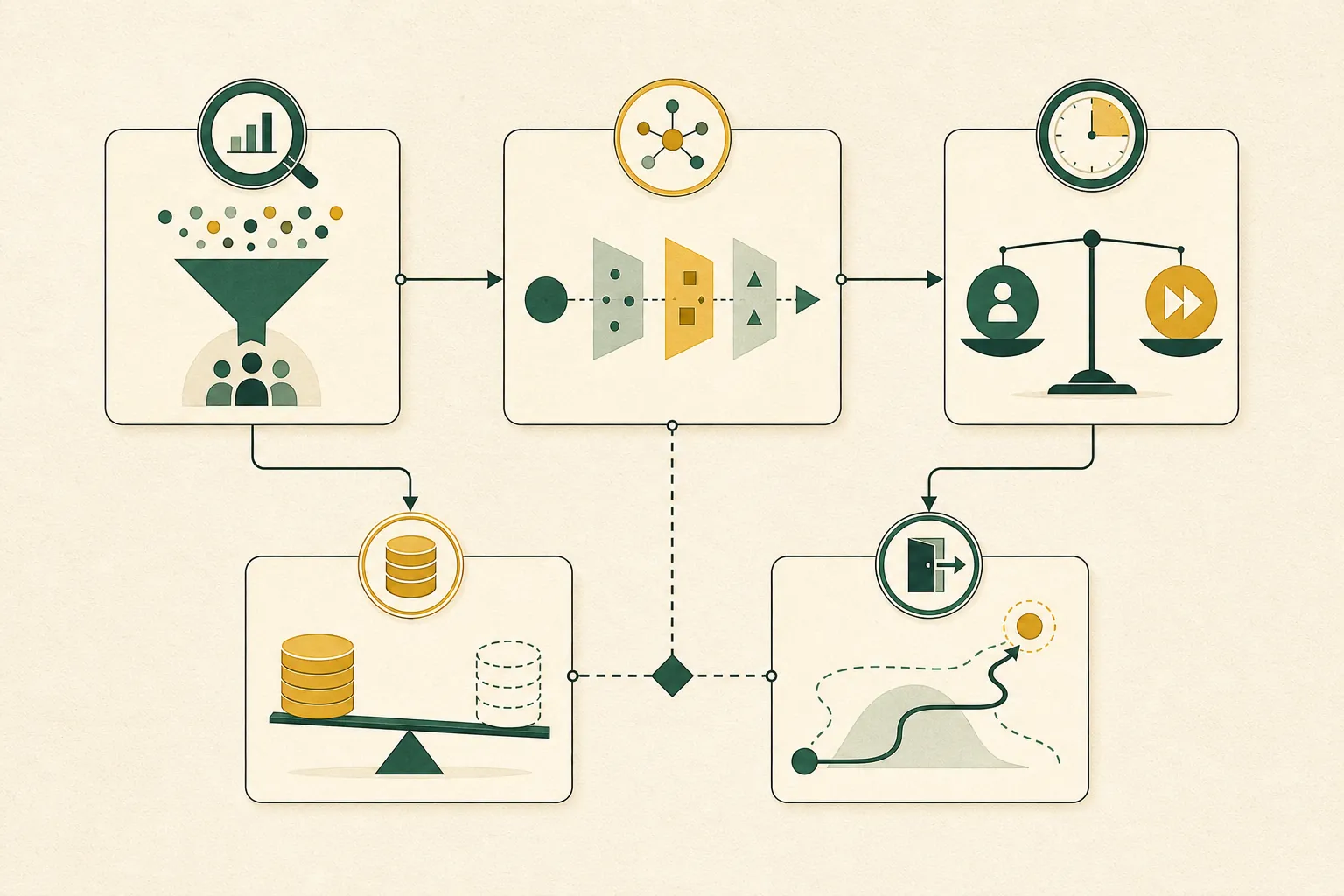
A market entry strategy analysis examines how a company could distribute and deliver an offer in a new target market before it selects an entry mode. Wikipedia defines a market entry strategy as a planned distribution and delivery method of goods or services to a new target market. Source: Wikipedia, accessed 2026-09-20. Use this operator worksheet as an analysis template for one country, customer segment, and offer. Go International Advisory's editorial tests cover demand evidence, channel access, control versus speed, capital and regulatory burden, and the exit option. They are judgment prompts, not universal ratings.
Our verdict: run the worksheet before you commit to a mode label.
How do you determine a market entry strategy?
Start with a named country, customer segment, and offer. Keep that decision scope fixed while you compare candidate modes. Wikipedia lists direct setup in the market, direct exporting, indirect exporting through a reseller, distributor, or sales outsourcing, and production in the target market. It also lists licensing, greenfield projects, franchising, business alliances, direct or indirect exporting, turnkey projects, joint ventures, and outsourcing. Source: Wikipedia, accessed 2026-09-20.
The list does not select a mode for your business. The worksheet below is our editorial approach to making the choice explicit. It asks what supports the decision, what the mode requires, and what can be changed if the premise does not hold.
- Demand evidence: write down the evidence that supports demand for this offer, from this customer segment, in this country.
- Channel access: identify the route by which the offer can reach the target customer and who would control that access.
- Control versus speed: state which decisions must remain with your company and where you would accept another party’s involvement to pursue speed.
- Capital and regulatory burden: list the commitments implied by each candidate mode. For any legal or regulatory conclusion, use wording from qualified country-specific advice rather than this editorial worksheet.
- Exit option: state what can be stopped, transferred, renegotiated, or retained if the chosen mode no longer fits.
This is analysis before selection, not a score that selects the answer automatically. A useful output makes disagreement visible: one stakeholder can challenge the demand evidence, another can question the channel assumption, and a decision owner can record the trade-off.
What demand evidence should you test first?
Write the demand case as a claim that can be examined. Name the customer segment, the offer, and the evidence you are relying on. Do not let a broad description of the country stand in for evidence about the buyer you intend to serve.
Use the same demand case for every mode in the comparison. Otherwise, the analysis quietly compares different market opportunities rather than different delivery choices. If the evidence is incomplete, mark it as incomplete. The worksheet is still useful when it reveals that mode selection is ahead of the evidence.
For a deeper treatment of the evidence question, use the market entry framework. If you are comparing the overall strategic choice rather than filling this worksheet, read how to choose a market entry strategy.
How should you analyze channel access?
Channel access is a decision test in this editorial framework. For each candidate mode, name the party that connects the offer to the customer. Then record which commercial decisions sit with your company and which would sit with another party.
Keep the entry mode and the channel assumption separate. “Exporting” is a mode label, but the Wikipedia page itself distinguishes direct exporting from indirect exporting through a reseller, distributor, or sales outsourcing. Source: Wikipedia, accessed 2026-09-20. The analysis therefore needs both the mode and the proposed route to the customer.
- Name the target customer.
- Name the proposed route to that customer.
- Record who would own the customer relationship.
- Record which assumption about access still needs evidence.
How do you compare control, capital, speed, and reversibility?
The table is an editorial comparison, not a statement of measured performance. Every qualitative cell is labeled as judgment because the result depends on the proposed arrangement. “Higher” and “lower” describe a relative planning view inside this worksheet. They are not sourced averages.
| Commonly discussed mode | Control | Capital intensity | Speed | Reversibility |
|---|---|---|---|---|
| Indirect export | Editorial judgment: lower | Editorial judgment: lower | Editorial judgment: higher | Editorial judgment: higher |
| Direct export | Editorial judgment: medium | Editorial judgment: lower | Editorial judgment: medium | Editorial judgment: higher |
| Licensing or franchising | Editorial judgment: lower | Editorial judgment: lower | Editorial judgment: medium | Editorial judgment: depends on agreement |
| Business alliance or joint venture | Editorial judgment: shared | Editorial judgment: medium | Editorial judgment: medium | Editorial judgment: depends on agreement |
| Owned local entity or greenfield project | Editorial judgment: higher | Editorial judgment: higher | Editorial judgment: lower | Editorial judgment: lower |
Mode names are drawn from modes listed on the approved Wikipedia page. The qualitative ratings are Go International Advisory editorial judgments, not measured facts. Source for mode names: Wikipedia, accessed 2026-09-20.
Do not select a mode from the table adjectives alone. Define the control you require, the commitment you can accept, the speed you are seeking, and the exit option you need. Then challenge each rating for the actual arrangement under discussion.
How do you examine capital and regulatory burden?
This worksheet treats capital and regulatory burden as questions, not as conclusions. The packet does not provide country-specific legal or regulatory sources, so this page does not state what a particular structure requires.
For each candidate mode, create two clearly separated fields:
- Capital judgment: record the commitments included in your proposed arrangement and label the assessment as an internal judgment.
- Regulatory question: record the exact question that requires qualified, country-specific confirmation. Do not convert an assumption into legal guidance.
The point is to keep an unresolved regulatory question visible in the decision. An unverified answer should remain marked as unverified. This protects the worksheet from presenting editorial analysis as professional legal advice.
How do you define the exit option?
Reversibility is the final test in this editorial framework. For the proposed mode, state what would remain if the company decided not to continue with that arrangement. Examine contracts, assets, relationships, knowledge, and responsibilities only as categories to be checked in the specific proposal.
A clear exit field avoids vague labels such as “flexible.” It records the actual decision: what can be stopped, what may need to be transferred or renegotiated, and what the company would retain. Any conclusion about contractual rights must come from the relevant agreement and qualified advice, not from this article.
Which market entry strategy types should you compare?
Market entry strategy types do not form one universal list of four. The cited Wikipedia strategy section names direct setup in the market, direct exporting, indirect exporting through a reseller, distributor, or sales outsourcing, and production in the target market. The same section also names licensing, greenfield projects, franchising, business alliances, direct or indirect exporting, turnkey projects, joint ventures, and outsourcing. Source for these mode names: Wikipedia, accessed 2026-09-20.
These are source-listed mode names, not a ranking or a prescribed shortlist. Go International Advisory's editorial decision tests are separate. For each mode under consideration, use the worksheet to test demand, channel access, control versus speed, capital and regulatory burden, and the exit option. The tests compare the proposed arrangements. They do not create another list of market entry types.
What is an example of a market entry strategy?
Direct exporting is one mode named on the Wikipedia page. Source: Wikipedia, accessed 2026-09-20. An analysis for a Western SME would not stop at that label. It would identify the country, customer segment, offer, demand evidence, customer route, desired control, proposed commitments, unresolved regulatory questions, and exit option.
That distinction separates a mode example from a decision. The market entry strategy guide covers the broader topic, while this page is the worksheet used before choosing. See the market entry strategy consulting guide for the consulting page.
How do you use SWOT for market entry?
In this editorial worksheet, SWOT is an optional summary of strengths, weaknesses, opportunities, and threats. Use it to summarize evidence already recorded, not to replace the underlying analysis.
- Strengths: internal points supported by the decision file.
- Weaknesses: internal constraints already identified.
- Opportunities: external conditions supported by evidence in scope.
- Threats: external conditions or unresolved questions already identified.
A SWOT box does not determine the mode. Return its entries to the comparison table and ask whether they change the control, capital, speed, or reversibility judgment.
What belongs in a market entry strategy analysis worksheet?
Use one row per candidate mode. Keep the wording short enough that another decision-maker can challenge it. Where a claim depends on outside evidence, link that evidence directly to the claim in the working file.
- Decision scope: country, customer segment, and offer.
- Demand evidence: supporting evidence and open question.
- Channel access: proposed route and relationship owner.
- Control versus speed: required control and accepted trade-off.
- Capital judgment: commitments in the proposed arrangement.
- Regulatory question: exact point awaiting qualified confirmation.
- Exit option: what can stop, transfer, change, or remain.
- Decision: selected mode, rejected modes, and stated rationale.
If the decision needs outside support, the market entry consultant page explains the advisory route. For the commercial plan connected to the selected mode, see the B2B go-to-market strategy guide.
What are common market entry strategy analysis questions?
How do you determine a market entry strategy?
Our editorial framework is to test demand evidence, channel access, control versus speed, capital and regulatory burden, and the exit option before comparing modes. Keep the country, customer segment, and offer fixed across the comparison.
What are the four market entry strategies?
The approved Wikipedia page does not present one fixed set of four. It names direct setup, direct and indirect exporting, target-market production, licensing, greenfield projects, franchising, alliances, turnkey projects, joint ventures, and outsourcing. Source: Wikipedia, accessed 2026-09-20.
What is an example of a market entry strategy?
Direct exporting is one example named on the approved Wikipedia page. Source: Wikipedia, accessed 2026-09-20. The analysis must still specify the evidence and trade-offs for the proposed arrangement.
What is SWOT analysis for market entry?
Here, SWOT is an optional editorial summary of strengths, weaknesses, opportunities, and threats. It organizes evidence but does not replace the mode analysis.
Written by Tileo, operator at Go International Advisory.